A blend that is defined by when it’s used
Every household has a slightly different garam masala and most of them will tell you theirs is the correct one. The variation is real and it goes further than people expect — the number of components, the proportions, whether anything is roasted, whether the mixture leans hot or sweet or floral.
What almost none of them vary is the timing. It goes in near the end. That constraint is what actually defines the blend, and once you see it, the composition stops looking arbitrary.
Two different jobs, two different sets of spices
Spices used at the start of a dish are being asked to be transformed. They go into hot fat or into a long simmer, they give up what they have, and what they contribute at the end is a base — deep, blended, no longer identifiable as individual ingredients. Turmeric, coriander seed, ground chilli and cumin mostly work this way.
A finishing blend is asked for the opposite. It has to arrive intact, register as itself, and sit on top of everything already built. That means it has to be made from spices whose most valuable compounds are the ones that would have been destroyed by an hour of cooking.
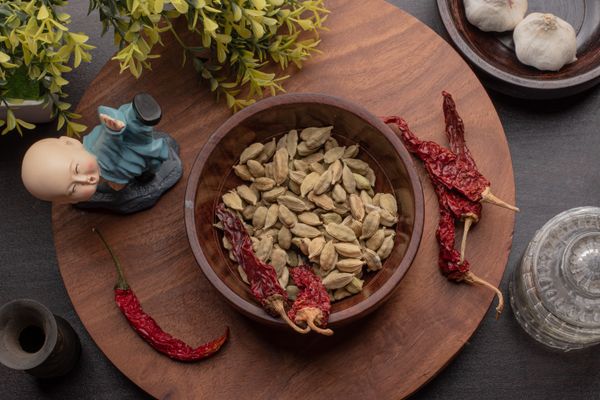
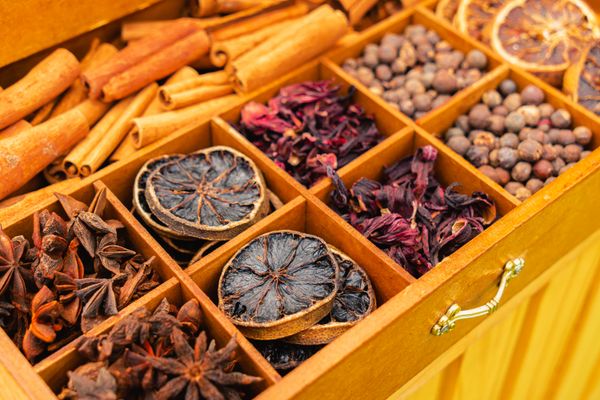
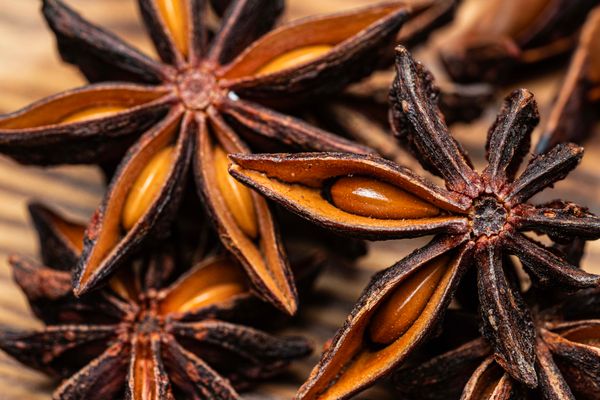
Look at what is usually in one and the pattern holds. Cardamom, cloves, cinnamon or cassia, black pepper, nutmeg, mace, bay — these are the intensely aromatic spices, the ones whose character is carried in volatile oils rather than in colour or bulk. Put them in at the beginning and most of what you paid for goes up the extractor.
The name is about sensation, not about heat
Garam means hot, and the assumption that follows is that a garam masala makes food spicy. It usually contains very little chilli and sometimes none at all. The heat referred to is the warming quality attributed to these spices in traditional systems of classification, which is a claim about how the body responds rather than about the tongue.
What they do produce is a sensation of warmth in a looser sense — pepper contributes a real pungency through a different compound from chilli, and cloves and cinnamon both carry compounds that act on the same nerve endings that register temperature. So the name is not simply wrong. It is describing something other than what a modern reader assumes.
Whole, ground and roasted are three different products
The same list of spices behaves quite differently depending on how it’s prepared. Whole spices dropped into hot fat at the start of a dish release their oils slowly and give a rounded background. The same spices ground and stirred in at the end give a sharp, forward hit that sits distinctly on the surface of the dish.
Roasting before grinding changes it again. Dry heat drives off some of the lighter volatiles and creates new compounds through browning, so a roasted blend is deeper, nuttier and less bright. Some regional versions insist on it and others consider it a mistake, which tells you it is a genuine choice rather than a step someone forgot.
Grinding also starts a clock. A whole clove holds its oils inside a protected structure almost indefinitely; a ground one is presenting an enormous surface to the air, and a jar mixed a year ago is a shadow of what it was in the first month.
Why buying one is harder than it looks
A commercial blend has to survive a supply chain, so it is generally made from what stores and grinds economically and it has usually been sitting for a while. That does not make it useless, but it does mean the volatile top notes — the part the blend exists for — are the part most likely to be missing.
The practical test is the smell on opening, and the second test is what happens when a little is warmed in fat. A blend with something left in it will fill a room. One that doesn’t is not going to improve in the dish.
Making a small quantity is genuinely worthwhile here in a way it often is not with single spices, because the whole spices keep and the mixture doesn’t. A month at a time is a reasonable batch, and it costs nothing but a grinder and ten minutes.
Common questions
Can I use garam masala at the start of cooking instead?
You can, and some dishes do use a portion early to build a base. But you will lose most of the aromatic top notes to the cooking time, and the blend was assembled specifically to supply those. Splitting it, with a little early and the rest at the end, is a common compromise.
Why does every recipe seem to assume a different blend?
Because there is no standard. The composition varies by region, by community and by household, and a recipe written by someone whose blend is heavy on cardamom assumes a different quantity from one written by someone whose blend leans on pepper. Adjust to the jar in front of you rather than to the number on the page.
Does storing it in the fridge help?
Not really, and it can hurt. The problem is oxidation and the loss of volatiles, which cold slows only slightly, while taking a cold jar in and out of a warm kitchen invites condensation inside it. A tightly sealed opaque container away from the stove is a better answer.
Editor, Wah Taste
Sanaya has written about everyday cooking, street food, spice & pantry for most of the last decade and prefers a plain explanation to a clever one.