Two instructions that arrive together
Salt the dal at the end. Add the tomatoes later still. The two get repeated in the same breath, as though they were one rule with a pair of ingredients attached, and most of us follow both without ever asking which is actually doing the work. Only one of them is well supported by anything resembling a mechanism.
The other has been argued over for decades, and the argument has quietly been moving in the opposite direction from the advice. It is worth separating them, because one of these will visibly change how your dal turns out and the other mostly will not.
What is holding the pulse together in the first place
Softening a lentil is not simply a matter of getting water into it. Water goes in fairly early, which is why a soaked dal is swollen long before it is edible. What takes the time is the breakdown of the material that glues the plant cells to one another — a pectin-rich layer between cell walls, held rigid partly by calcium and magnesium ions that bridge one pectin chain to the next.
Cooking works by degrading that layer so the cells can separate. When enough of it has gone, the grain collapses under the pressure of a spoon and what you have is dal rather than a bowl of hot pebbles. Anything that stabilises those pectin bridges slows the whole process down, and anything that weakens them speeds it up.
The seed coat matters too, since it is a physical barrier to water and heat, which is exactly why a split, skinned dal cooks in a fraction of the time a whole one needs. But once the water is in, it is the cell wall chemistry that decides how long you stand there.
The tomato rule is the one that is real
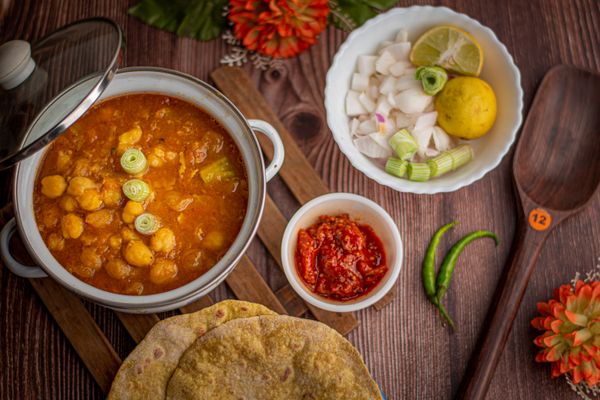
An acidic environment stabilises pectin. The pectin chains hold together better at low pH, and the reactions that would otherwise break them down proceed considerably more slowly. Tomatoes, tamarind, amchur, lime, kokum, a splash of vinegar — all of them do this, and they do it whether or not you intended them to.
This is why a dal built with tomatoes in from the start can sit at a rolling boil for an hour and still be faintly grainy, and why the same pulse, cooked plain and then given the same tomatoes at the end, goes soft in half the time. It is not the cook’s patience that changed. It is the pH of the pot.
Two honest qualifications. The quantity matters — one small tomato in a large pot of dal shifts the acidity very little and will not ruin anything. And some dishes actively want grains that hold their shape, in which case the acid early is a tool rather than a mistake.
The salt rule is probably backwards
The traditional claim is that salt added early toughens pulses and stops them softening. The mechanism usually offered for this is vague, and the more likely chemistry runs the other way: sodium ions tend to displace the calcium and magnesium that are cross-linking the pectin, and pectin with fewer bridges falls apart sooner rather than later.
Cooks who have tested this at home, and food writers who have looked at it seriously, mostly report that salted water softens pulses slightly faster, not slower. It is not a settled question and the effect is small next to what acid does. But the confident version of the rule deserves less confidence than it gets.
There is still a decent practical reason to salt late, and it has nothing to do with texture. A dal reduces as it cooks, sometimes a great deal, so salt judged at the start is being judged against a volume that will not exist at the end. Season when the pot is close to the consistency you are going to serve.
The two variables nobody controls
Water hardness changes cooking times more than most kitchen advice does. Hard water carries dissolved calcium and magnesium, the same ions that were bridging the pectin, and it keeps resupplying them from outside. The same dal, the same stove, the same cook, in two different cities, can differ by twenty minutes for this reason alone.
Age is the second one, and it is invisible. Pulses that have sat in a warehouse for a long time develop a seed coat that resists water, and no amount of soaking fully undoes it. You cannot tell by looking, which is the frustrating part; the only real defence is buying somewhere with fast turnover and not stockpiling.
Soaking helps mainly by shortening the time the grain has to spend at boiling temperature, which is why soaked pulses hold their shape better even when the total softening is the same. If a dal reliably fails you, suspect the water and the stock before you suspect your technique.
Common questions
So should I salt at the start or not?
Either works, and the texture difference is small enough that most people would not spot it. Salt late if you want to judge seasoning against the final volume, which is the more useful reason. Just do not expect early salt to be the thing keeping your dal hard.
Why does my tomato dal never go creamy?
Almost certainly the acidity. Cook the pulse until it has genuinely collapsed, then add the tomatoes and cook them through. If the recipe wants the tomatoes to break down into the dal, give them their own few minutes in fat first.
Does baking soda help?
It does, dramatically, because it raises the pH and pectin falls apart quickly in alkaline conditions. It also damages some nutrients, can leave a soapy note if overdone, and turns pulses slightly slimy. A very small pinch is a legitimate trick; a spoonful is not.
Senior writer, Wah Taste
Mateo joined to cover everyday cooking, street food, spice & pantry and stayed for the awkward questions and thinks most subjects are more interesting once you know how they work.