The vegetable that fails in two directions
Potatoes go wrong in a curry in two ways that look like opposite problems. Either the cubes disintegrate into a thick, slightly gluey gravy with nothing recognisable left in it, or they sit there stubbornly firm while everything around them has finished, tasting of very little. Cooks usually blame the timing. Timing is rarely the main culprit.
What decides the outcome is what the potato was before it went anywhere near the pan — specifically, how much starch its cells contain and how much water sits between them. That is a property of the variety and, to a lesser extent, how long it has been stored. You are choosing your result in the market, not at the stove.
Two kinds of potato and one variable
Potatoes are usually sorted into floury and waxy, and the difference is largely starch content. A floury potato is densely packed with starch granules and relatively low in moisture. When heated, those granules absorb water, swell and push the cells apart, so the flesh becomes light and separates readily — which is exactly what you want mashed under a bhaji, or roughly crushed into a filling.
A waxy potato holds less starch and more water, and its cells stay bound to one another through cooking. It stays firm, holds a cut edge, and can be simmered in a gravy for a long time without turning to sludge. Between the two sits a large middle ground of all-purpose potatoes that do a bit of both and disappoint anyone with a strong opinion.
Storage shifts things gradually. A potato kept for months converts some of its starch to sugar, which makes it brown faster and taste sweeter, and it also loses water, which concentrates what remains. That is why the same variety can behave noticeably differently in different months.
How to tell without a label
Indian markets rarely label varieties, so the practical tests matter more than the names. Weight is the most useful signal: a potato that feels heavy for its size is carrying more water and is likely to be on the waxy side, while a light one for its bulk is denser in starch. Thin, smooth skin tends to go with waxier flesh; rougher, drier, netted skin more often with floury.
Cutting tells you more. A floury potato leaves a chalky, slightly dry film on the knife and the cut face looks matte; a waxy one is wetter and glossier and the slices feel faintly slippery. Neither test is infallible, but a couple of minutes of paying attention will sort a sack into two piles better than guesswork.
The old salt-water float test — the idea being that denser, starchier potatoes sink further — is often quoted. It does track density in principle, but the differences between two potatoes from the same crate are small enough that it rarely gives you a clean answer in a home kitchen.
What the cooking method can and cannot rescue
Given a potato that wants to fall apart, a few things slow it down. Cutting larger reduces the surface-to-volume ratio, so less of each piece is exposed. Adding potatoes to a gravy that is already acidic helps considerably, because acid stabilises the pectin holding the cells together — the same mechanism that keeps a pulse hard in a tomato-heavy dal. Par-cooking and then cooling before the final simmer firms the surface as well.
What none of this can do is convert a floury potato into a waxy one. The starch is there and it will swell. Pushed far enough, the trick works against you anyway, because a potato kept intact by acid is also a potato that has not absorbed the gravy and tastes bland at the centre.
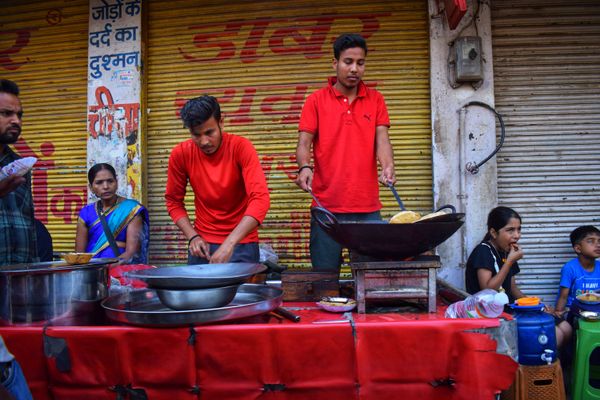
The reverse rescue is easier. If a waxy potato refuses to give the dish any body, crush a few pieces against the side of the pan and stir them through. The released starch thickens the liquid and the remaining cubes stay whole, which is a common street-stall move and a genuinely good one.
Matching the potato to the dish
Once the variable is clear, the choices follow. A dry sabzi where each piece should stay separate and take a crust wants a firmer, waxier potato that will not slump. A thick, homogeneous mash under butter wants the flouriest thing available, because you are using the potato as the body of the dish rather than as an ingredient in it.
A samosa or vada filling sits in between and depends on the style you are after — a crumbly, distinct filling needs some structure surviving, while a smoother one wants the starch released. Fried potato is its own case: low moisture and high starch produce the driest interior and the best crust, since less water inside means less steam fighting the surface as it sets.
None of this is a rule anyone needs to memorise. It reduces to a single question asked before cooking rather than during it: is the potato meant to be a piece of this dish, or is it meant to be the dish? The answer determines which sack to buy from, and everything after that is much easier.
Common questions
Why do my potatoes stay hard in a tomato curry?
Acid firms up the pectin between the cells and slows softening a great deal. Cook the potato until it is nearly done before the tomato goes in, or accept a longer simmer. This is the same reason chickpeas resist in an acidic gravy.
Does soaking cut potatoes do anything useful?
It rinses free starch off the cut surfaces, which helps if you are frying and want pieces that do not stick together or brown unevenly. For a curry it mostly just costs you a little of the thickening you might have wanted, so it is worth skipping.
Should potatoes be stored in the fridge?
Generally not. Cold speeds the conversion of starch to sugar, which makes the potato taste sweeter and brown much faster and darker when fried. A cool, dark, ventilated spot away from onions is a better arrangement.
Editor, Wah Taste
Sanaya has written about everyday cooking, street food, spice & pantry for most of the last decade and prefers a plain explanation to a clever one.