A shelf that looks like variety and is partly processing
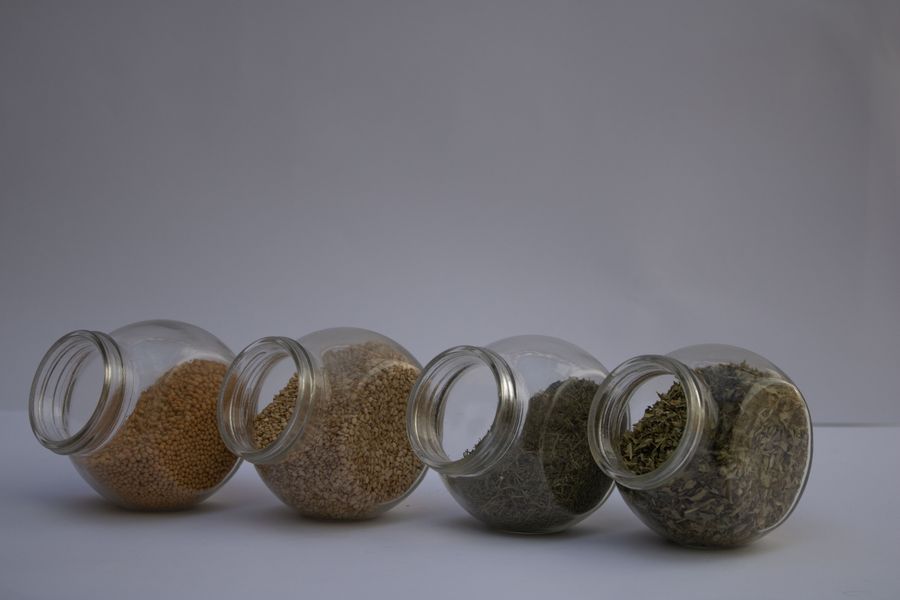
A shop selling pulses will have a dozen or more jars, and a first look suggests a dozen different plants. A closer look shows that several of them are the same seed at different stages of milling — whole with its skin on, split with the skin still attached, and split and polished with the skin removed entirely.
The three aren’t grades of the same thing, with one better than another. What the mill took off decides the seed’s behaviour, and they cook differently enough that a recipe written for one doesn’t work with another, and the words used for them locally are precise even where the English translation is not. This is one of the places where a vague recipe does real damage.
The seed coat is the part that resists
The skin on a pulse is a tough layer designed to keep water out until the seed is ready to germinate. It slows hydration considerably, so a whole pulse takes far longer to soften than a skinned one and generally wants soaking beforehand to give the water time to get in.
It also holds the seed together. A whole pulse cooked until tender keeps a recognisable shape and a distinct bite, because the coat is still doing its structural job even when the interior has gone soft, which is exactly what a dish built on texture requires.
Splitting the seed removes that. A split pulse has two flat faces with no coat on them, so water enters immediately and the interior breaks down quickly. Take the skin off as well and there is nothing to hold anything together at all, which is why the skinned split varieties collapse into the cooking liquid within half an hour.
Collapse is a feature in some dishes and a fault in others
A dal that is meant to be a smooth pourable liquid is made from a pulse that will disintegrate, and the cook helps it along by stirring. A dish meant to be eaten with a spoon in identifiable pieces, or one made dry, needs the coat present, and no amount of careful cooking makes a skinned split pulse hold its shape.
Cooking time follows the same line and the gap is large. A whole pulse soaked overnight and then simmered may want the better part of an hour, or a pressure vessel; the split form of the same seed is done in half that; the skinned split form is falling apart before the whole one has begun to yield. Putting two forms in the same pot, which people do when a jar runs low, guarantees that one of them is wrong.
This is also the reason the same name appears on a menu with wildly different textures. When a regional recipe specifies the whole form and a cook uses the split one because it was in the cupboard, the result is not a variation; it is a different dish with the same aromatics.
Skin, fibre and what leaves with it
The seed coat carries most of the fibre in a pulse and a good part of the minerals, and removing it produces something faster to cook and easier on the digestion at the cost of some of that. Neither outcome is straightforwardly better, and traditional cooking uses both forms deliberately depending on who is eating and when.
Some of the compounds that make a meal of pulses hard going are concentrated in and just under the coat as well, and both the milling and a long soak with the water thrown away reduce them. That is not the reason the milling was invented, but it is part of why the skinned forms became the everyday ones in so many households and the whole forms stayed for the dishes where the texture justifies them.
The coat also carries most of the colour, which is why a dark whole pulse and its pale split counterpart look like unrelated ingredients. The compounds that make a whole pulse taste earthier and slightly more bitter are concentrated there as well, so a skinned pulse is milder in a way that suits a delicate preparation and reads as thin in a robust one.
Grinding is a fourth form and it is not interchangeable either
Several pulses are also sold ground, and a batter or dough made from ground pulse behaves differently again depending on whether the flour came from a skinned or unskinned seed. Fermented batters in particular depend on a skinned pulse ground fine, because the coat interferes with both the texture and the aeration.
Freshness deserves more attention here than for the whole forms. A whole pulse is protected by its coat and keeps well; a split one has exposed surfaces and ages faster; a ground one has an enormous surface area and goes stale and slightly bitter within months. Buying whole and having it split or ground as needed is not practical for most households, but buying the ground forms in small quantities and using them promptly is.
Common questions
Does soaking help a skinned split pulse?
A little, mostly by shortening the cooking time slightly and making it more even. The dramatic benefit of soaking belongs to the whole forms, where the seed coat is the barrier being overcome. For a skinned split pulse it is a convenience rather than a requirement.
Why do some recipes insist on the whole form?
Because the dish depends on the pieces holding together, and the seed coat is what does that. Dry preparations, salads and anything where a distinct bite is expected all need it. A recipe that specifies the whole form and then cooks it to complete softness is unusual and generally has a reason of its own.
Is the skin worth eating?
It carries fibre and minerals and it contributes a good deal of the flavour, so on general grounds yes. It is also the part that is hardest work to digest, which is why the skinned forms are the ones given to anyone unwell or very young. Both forms have a place, and the traditional kitchens use both rather than choosing.
Features writer, Wah Taste
Nikhil writes about everyday cooking, street food, spice & pantry, mostly the parts other people skip and would rather show the working than assert the conclusion.