A step everybody believes in and few examine
Overnight is the standard instruction, and the belief behind it is that time allows the flavours to penetrate right through. Cut open a piece of meat that has been in a spiced yoghurt marinade for twelve hours and the reality is visible: a coloured outer layer, and pale meat in the middle.
That isn’t a failure of the marinade. It’s what diffusion through dense muscle actually looks like, and once you accept it the marinade’s real job becomes much easier to see. A marinade is a surface treatment that happens to have consequences for everything that comes after it.
Molecules move slowly and unevenly
Meat is not a sponge. It is a dense packing of muscle fibres held in sheets of connective tissue, with the water inside the cells rather than in open channels, and anything dissolved in a marinade has to work its way between and through all of that.
Small charged particles such as sodium and chloride move fastest, and salt is the one component that genuinely travels a useful distance given time. Most of the flavour molecules in spices and aromatics are far larger, and they progress a couple of millimetres at best over many hours. Oil-soluble compounds move less again, since the interior of the meat is watery and they have no easy route through it.
Acid is a special case because it changes the tissue it is passing through. It denatures the proteins near the surface, which loosens the structure slightly and lets a little more in, and at the same time it makes that outer layer softer and paler in a way that can tip over into mushiness after long enough.
What the marinade is really achieving
The first effect is seasoning that reaches deeper than a rub applied at the pan, thanks to the salt. The second is a surface that has been chemically prepared: partly denatured protein browns differently, holds spice against the meat, and dries at a different rate.
The third is water retention. Salt in the outer layers changes how the proteins there hold water during cooking, so a marinated piece loses less moisture and the outside stays juicier. That is a genuine and useful effect, and it is the main reason marinated meat eats better even though the middle never saw the marinade.
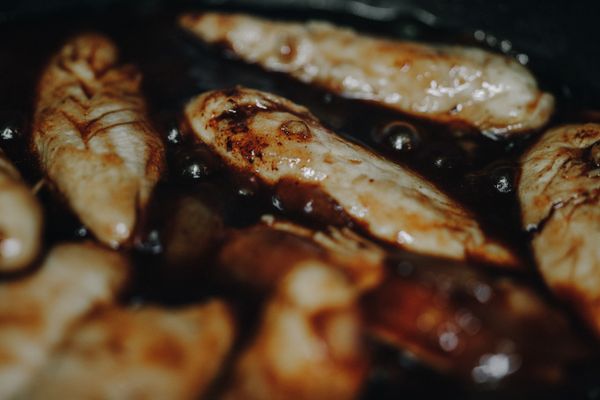
And the fourth is simply that the coating cooks along with the meat. A thick spiced yoghurt layer becomes part of the finished dish, browning and clinging, which is why the tandoori family of preparations use such heavy marinades and why the flavour reads as strong despite the shallow penetration.
Yoghurt, papaya and the tenderising claims
Yoghurt is a mild acid, gentle enough that a long marination does not wreck the texture the way a strong one does, and it carries fat and milk proteins that cling to the surface and help spices adhere. Whether it tenderises much is contested; it certainly softens the outer layer, and the claim that it works right through is not well supported.
Raw papaya is a different matter, because it contains an enzyme that genuinely breaks down proteins including the connective tissue. It works, and it works too well if left too long, turning the surface to paste. Its use is traditional in several meat preparations and the quantities involved are small for good reason.
Salt alone, given enough time, does more of the useful work than most of the additions people argue about. That is an unglamorous conclusion and it holds up better than most of the alternatives.
Working with the shallowness instead of against it
If penetration is limited, then the useful levers are surface area and time, in that order. Smaller pieces have proportionally more surface, scoring a large piece opens more of it, and both do more in an hour than an extra night in the refrigerator does to a whole joint.
The other lever is what goes into the marinade in the first place. Since most of the aromatic compounds are never going to travel far, they may as well be in a form that clings and cooks well on the surface, which is the reasoning behind thick pastes, drained yoghurt and a decent quantity of oil. A thin watery marinade runs off in the pan and takes the flavour with it.
It also means a marinade past a certain point is doing nothing except slowly damaging the outside. Long marination in an acidic mixture gives a chalky, dry outer layer that no amount of careful cooking recovers. And anything left out of the cold for hours to marinate is doing something else entirely, which is why the whole practice belongs in the refrigerator wherever one exists.
Common questions
Is there any point marinating vegetables?
Some, though the mechanism is different. Vegetables have cell walls rather than muscle fibres, and salt draws water out of them rather than seasoning inward, which changes texture as much as flavour. For most vegetables a short salting or a coating applied just before cooking achieves nearly everything a long marination would.
Should meat be marinated at room temperature to speed it up?
It does speed diffusion slightly, and it speeds microbial growth a great deal more, so the trade is poor. Keeping it cold and giving it more time, or cutting the pieces smaller, gets to the same place safely. Local food-safety guidance is worth following over any general rule of thumb.
Does pricking the meat help?
It creates channels that let some marinade in mechanically, so it does have an effect, particularly with a thick piece. It also gives the juices more routes out during cooking, so there is a cost. Scoring the surface in a few places is the usual compromise and it is a reasonable one.
Editor, Wah Taste
Sanaya has written about everyday cooking, street food, spice & pantry for most of the last decade and prefers a plain explanation to a clever one.