The batter is doing more than covering the vegetable
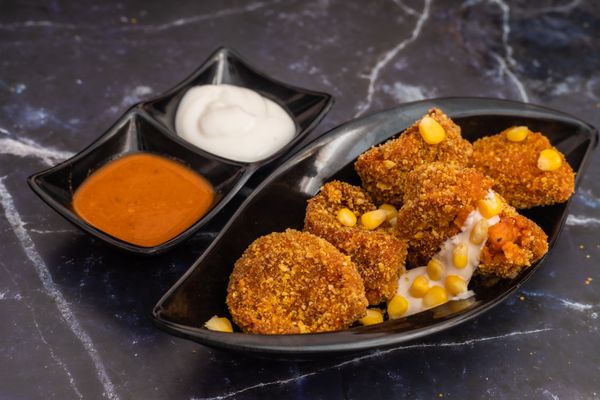
A fritter is two foods cooked at once. The vegetable inside is being steamed in its own moisture behind a barrier, while the barrier itself is being fried, dried and browned in oil at a temperature the vegetable never reaches. Everything people like about a good pakora comes from that split, and everything that goes wrong comes from the barrier failing to hold up its end.
Which is why the choice of flour isn’t incidental. Gram flour isn’t a substitute for wheat flour in this job; it’s a fundamentally different material that happens to be used the same way, and the differences are large enough to change how the whole thing is assembled.
No gluten means it sets instead of stretching
Wheat flour batters develop at least some gluten as soon as they are mixed, and gluten is elastic. It stretches, it traps expanding steam, and it produces a coating that puffs and can go leathery if it is worked or if it sits. Besan has no gluten at all, because the pulse it is milled from contains none of the proteins that form it.
What besan has instead is a lot of protein and a lot of starch that both set firmly when heated, in much the way a savoury batter cooked in a pan sets into a solid slab. The coating therefore goes from liquid to rigid without an elastic stage in between, and it holds whatever shape it was in at the moment it hit the oil.
That is the origin of the ragged, lacy edges on a well-made fritter. A dollop of besan batter dropped into hot fat keeps its irregular outline and its trailing wisps, each of which fries dry and crisp within seconds, whereas a wheat batter would have relaxed into a smoother shape before it set.
It holds a great deal of water and gives it up slowly
Gram flour takes up considerably more water than wheat flour for the same weight, and it holds that water more tightly. A batter that looks correct on the spoon may be carrying more moisture than the frying can drive off in the time available, which produces a coating that is cooked, pale and slightly heavy rather than crisp.
This is behind two habits that look contradictory. Vendors mix the batter thicker than a home cook expects, and they also let vegetables sit in salt so that some of their own water joins the mix and thins it back down. The batter that goes into the oil is the result of both, and it is usually stiff enough to sit in a heap on the spoon rather than run off it.
Rawness is a real flavour and it needs heat to go
Uncooked gram flour has a distinct green, dusty taste that does not read as neutral in the way raw wheat flour more or less does. It needs proper heat for long enough to cook out, and a thick coating fried too cool will taste of it even when the outside has coloured.
This sets a floor under the frying temperature that the vegetable inside does not care about. Too cool and the coating soaks fat and stays raw-tasting; too hot and the outside browns and hardens before the vegetable has softened, leaving a crisp shell around something with a crunch nobody wanted. The narrow band between those two is why fritters are one of the harder cart items to reproduce.
Rice flour, soda and the second frying
Adding a proportion of rice flour or another starch is common, and it works by diluting the water-holding protein with something that dries faster and fries harder, giving a lighter and more brittle crust. It also weakens the batter, so there is a limit past which the coating stops adhering.
Both of those adjustments are trades rather than improvements. More starch gives a crisper crust that goes soft faster once it cools, because there is less protein structure holding it rigid, and that is a reasonable bargain at a cart where everything is eaten within a minute and a poor one at home where the plate sits on the table for ten.
A pinch of raising agent does something different again, generating gas that opens the coating up so that more of its surface is exposed to the oil and dries. The double fry that some vendors use is the most direct route of all: the first pass cooks the vegetable and sets the coating, the piece rests and lets internal moisture redistribute, and the second short pass drives water out of the crust while everything inside is already done.
Common questions
Why does my batter slide off the vegetable?
Usually because the surface is wet. A film of water between the vegetable and the batter prevents contact, and it turns to steam in the oil and pushes the coating away. Patting pieces dry, or tossing them in a little dry besan before they meet the wet batter, fixes it in most cases.
Does resting the batter help?
A short rest lets the flour hydrate fully, which makes the consistency more predictable and reduces the chance of dry pockets. A long rest is less useful, because besan batters can thin out as the vegetables release water and the mixture starts to ferment slightly in warm weather. Minutes rather than hours.
Is a chickpea flour from the supermarket the same thing?
Not always. Besan is normally milled from split brown chickpea rather than the large white variety, and the two differ in flavour and in how finely they are ground. Both work, but the flavour of the finished fritter is noticeably different, and the water uptake is not identical either.
Staff writer, Wah Taste
Omkar has been reporting on everyday cooking, street food, spice & pantry since long before it was fashionable and thinks most subjects are more interesting once you know how they work.