A bread chosen for its softness and served hot anyway
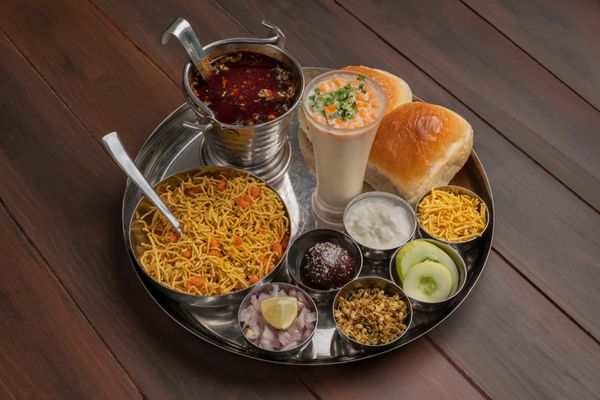
The bread that turns up beside a cart dish is almost always the same kind: a soft, pale, close-crumbed roll with almost no crust worth the name, baked in a joined tray so that the sides tear rather than cut. It is not a bread with much character of its own, and that is the point. It has to soak, tear cleanly in the hand, and carry something wetter and more interesting than itself. That’s the whole of the bread’s job, and it doesn’t need a personality to do it.
What is odd is that a bread valued for softness is nevertheless split and put face down on a hot griddle before it is served. If softness were all that mattered you would simply hand it over. The griddle is there because the roll arriving at the cart in the evening is not the roll that came out of the oven that morning, and the difference is chemical rather than a matter of drying out.
Bread goes firm because the starch reorganises
Freshly baked bread is soft because its starch has been swollen and dispersed by heat and water, leaving a disordered, flexible structure through the crumb. Over the following hours those starch chains slowly re-associate into ordered regions, pulling water along with them and stiffening the crumb as they go. That process is why bread firms up on the counter, and it happens even when very little moisture has been lost to the air.
The important consequence is that the change is largely reversible. Warming stale bread past a certain point breaks those re-formed ordered regions apart again and restores much of the original softness, which is why a stale roll heated properly eats close to fresh and why the same roll goes hard again faster the second time.
It also explains a habit that puzzles people, which is that bread kept in a cold place stales faster than bread left out. The reorganisation runs quickest at refrigerator temperatures and slows down both above and well below them, so the cold shelf is the worst place available for a soft roll you intend to eat tomorrow.
The griddle does three jobs in under a minute
Pressing the split faces onto a hot surface heats the crumb through quickly, which reverses the staling. It drives off surface moisture and browns the cut faces, adding a set of toasted aromas the plain roll does not have. And it puts fat directly into the crumb at the surface, which changes both the flavour and the way the bread behaves once the gravy arrives.
That last one is worth dwelling on. A dry cut face soaks up liquid immediately and turns to paste; a face that has been sealed with hot fat resists for long enough that the bread survives being dipped. The butter is doing structural work before it is doing anything else, whatever it may look like from the queue.
Why the same trick fails on a crusty loaf
A bread with a thick crust has a very different moisture gradient and a crumb built around larger, irregular holes, so pressing it flat on a griddle compacts it rather than refreshing it. It also cannot absorb a wet dish evenly, because the crust resists and the crumb collapses.
The soft roll used on carts has a fine, even crumb produced by a well-developed dough and a wetter, enriched mix, and that regular structure is exactly what allows it to take up liquid without falling apart in the hand. Regional variants of the same idea — the thicker bun, the sliced loaf toasted with butter, the small round used further south — all share the same close crumb and the same near-absence of crust.
At home the sequence usually goes wrong
The common domestic failure is not the bread but the order. Heating the roll first and then buttering it gives you a warm roll with butter on the outside, which is not what the cart is producing. Butter or fat has to be on the surface while it is against the heat, so that it enters the crumb and cooks there.
There is a third, quieter one, which is that the roll sold as pav in most bakeries now is a good deal larger and softer than it needs to be, and a very soft roll compacts under the press instead of toasting. Pressing more gently, or letting the split faces dry in the air for a minute before they meet the fat, gives the surface something to work with.
The second failure is heat. A gentle pan warms the bread without ever browning the cut face, and the toasted notes are a large part of what people are actually tasting. A hot, well-used surface, a firm press, and no more than a minute is closer to the mark. Give it three minutes and the crumb dries all the way through, at which point you have made toast, which is a perfectly good thing and the wrong one here.
Common questions
Is refreshing bread on a griddle the same as reheating it in an oven?
The mechanism is the same, since both reverse the starch reorganisation by heating the crumb. The griddle adds browning and fat on the cut face, which an oven does not, and it works far faster. For a bread that is going to be dipped, the sealed, browned surface matters as much as the softness.
Why does the bread go hard again quickly afterwards?
Because the reorganisation restarts once the bread cools, and it runs faster the second time now that some water has been driven off. This is why refreshed bread is served immediately and why nobody prepares a tray of it in advance, however busy the cart is.
Can a plain sliced loaf stand in for it?
It can, and several street preparations use exactly that. The result is a little different because a sliced loaf has a slightly drier, more open crumb, so it browns faster and soaks more aggressively. Cutting it thicker than seems necessary compensates for most of that.
Features writer, Wah Taste
Nikhil writes about everyday cooking, street food, spice & pantry, mostly the parts other people skip and would rather show the working than assert the conclusion.