A difference people notice and misread
Take a dish you know well from a cart and make it at home to the same recipe and it usually tastes underpowered, so the assumption forms that something is being withheld. There is a secret masala; the vendor is not telling. Occasionally that’s true, but far more often the recipe is not the variable.
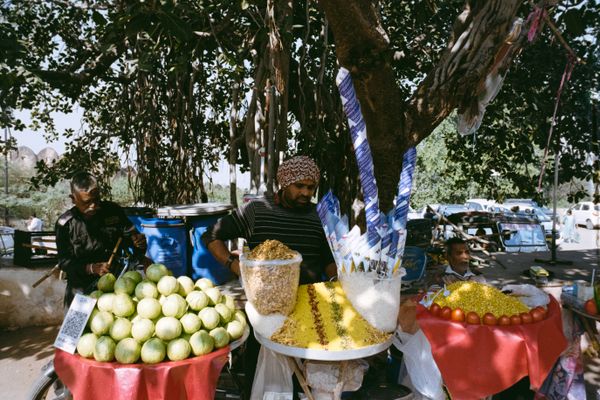
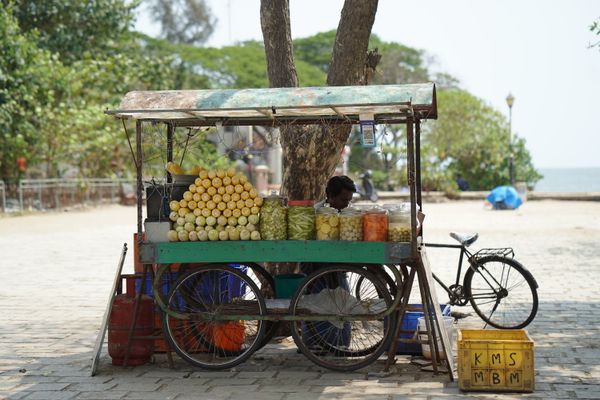
The vendor is cooking for a completely different eating situation, and the seasoning has been calibrated to that situation rather than to a plate at a table. They have also had thousands of chances to find the level, with immediate feedback from people who will simply walk to the next stall if the food is dull.
So the recipe you copied may well be accurate. It was written for conditions your kitchen does not reproduce, and the gap you are tasting is the gap between those two rooms.
A single item has to be complete on its own
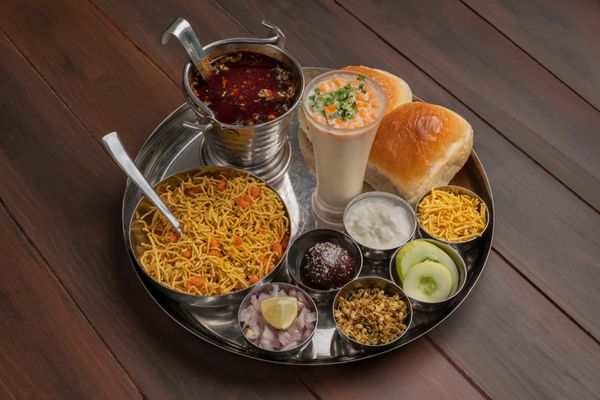
A home meal is a system. The dal is mild because the pickle is fierce, the vegetable is dry because the curd is wet, and no single component has to carry the whole experience — each is measured against what’s beside it on the plate. Nothing on a cart has that support.
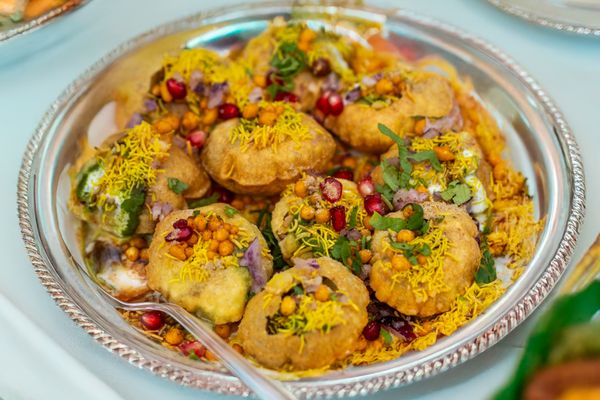
Street food is served as one item, eaten alone, with nothing to balance it against and nothing to return to. So it has to contain its own contrast internally: sour against sweet, salt against fat, crunch against soft, all inside one portion. That is why almost every street dish is loud across several axes at once, while a home dish is usually loud on one at most.
This is the main reason a street recipe cooked at home and served with rice and dal feels wrong. It has been placed inside a system it was built to work without.
The eating conditions genuinely reduce what you perceive
Outdoors, aroma disperses instantly rather than gathering above the plate, and a substantial part of flavour arrives through the nose. Wind, traffic and the general noise of a street all cut into attention, and attention is not incidental to tasting. Standing, holding the plate, moving between mouthfuls — all of it competes.
The portion is also small and consumed quickly, so there is no slow accumulation of flavour across a meal. Everything has to land in the first bite, because for a lot of customers there are only three or four of them.
A vendor who seasoned to the level that works at a quiet dining table would be running a stall where the food tastes flat, and they would find out about it fast.
Acid and salt do the heavy lifting, not just chilli
The obvious answer to making food register is chilli, and street food does use it. But the more interesting lever is acid. Sourness cuts through fat, arrives immediately, and makes a dish feel brighter without the fatigue that heat produces after a few bites.
Salt does something related but distinct. Beyond tasting salty, it suppresses bitterness and makes other flavours more prominent, so raising it lifts everything else with it. The characteristic sharpness of a good chaat is far more often salt and acid working together than it is chilli.
Fat matters too, and street food is generally more generous with it than home cooking. Fat coats the mouth, carries the compounds that dissolve only in oil, and extends how long the flavour lasts after the bite — which is exactly what you want when the bites are few.
Sweetness is the quiet fourth element, and it’s rarely there to be tasted as sweetness. A little of it rounds off the hard edge that a heavily soured, heavily salted dish would otherwise have, and it is the difference between a plate that is bracing and one that is simply punishing.
Reproducing it at home means adjusting the target
If you cook a cart dish and eat it at your own table, the honest move is to season down rather than trying to hit the original level. The conditions that justified that level aren’t present, and food built for a noisy pavement can be genuinely harsh in a quiet room.
If you want the actual experience, the fix is usually not more spice but more contrast and more temperature difference. Something cold against something hot, something crisp added at the last second, a wedge of acid at the end.
And serve it alone. A street dish surrounded by other dishes has been quietly demoted to a side, and it was never written for that part.
Common questions
Is street food really saltier, or does it just seem that way?
Generally it is, along with more acid and more fat. There is no fixed rule and it varies hugely between vendors, but the direction is consistent, and it follows from the item having to work alone and fast rather than from any carelessness.
Why does the same dish taste milder when I take it home in a box?
Several things at once. It has cooled, which cuts the aroma sharply; the crisp elements have absorbed moisture; and you are eating it in a calm room with your full attention, where the compensations built into it are no longer needed.
Should I add acid at the end or during cooking?
For this effect, at the end. Acid added early is partly cooked off and blends into the background, which is often what a slow dish wants. A late addition stays sharp and distinct, and sharpness is the quality being aimed at here.
Editor, Wah Taste
Sanaya has written about everyday cooking, street food, spice & pantry for most of the last decade and prefers a plain explanation to a clever one.