A garnish that’s never actually optional
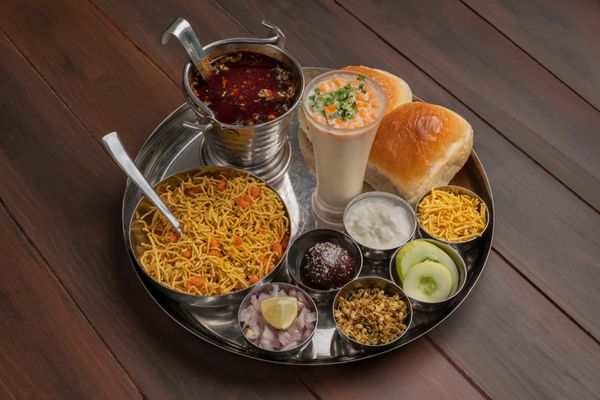
Order almost anything substantial from a street counter and it comes with two things nobody ordered: a small heap of raw onion, usually sliced into rings or rough slivers, and a wedge of lime. They are so standard that they have stopped being noticed, and they are frequently pushed to the side of the plate untouched.
They are not decoration and they are not filler. Both are doing specific work on food that has been cooked in a particular way, and the work is easier to see once you know what the cooking did.
Cooked food converges, and raw food doesn’t
Prolonged heat pushes flavours towards each other. Volatile compounds leave, sharp edges soften, textures move towards a common softness, and the longer something cooks the more of it tastes like one thing rather than several. That is often desirable — it is why a slow dal is comforting — but it means a cooked plate can be uniform in a way that dulls after a few mouthfuls.
A raw ingredient arriving at the end is untouched by any of that. Its volatile compounds are all still present, its cell walls are intact and crisp, and it’s at a different temperature from everything else on the plate. It reintroduces contrast that the cooking removed.
This is the same logic as a tempering poured over at the last moment, arriving from the other direction. One adds heat-extracted aroma, the other adds the aroma that heat would have destroyed.
Raw onion is pungent for the same reason cooked onion is sweet
An intact onion cell contains a set of sulphur compounds and, kept separately, an enzyme that acts on them. Cutting brings the two together and the reaction produces the sharp, eye-watering pungency within seconds. It is a defence mechanism, manufactured on demand.
Cooking destroys the enzyme almost immediately, which is why a cooked onion never develops that pungency and instead goes sweet as its sugars concentrate and brown. Raw and cooked onion are, functionally, two different ingredients from the same vegetable.
On a street plate the pungent version is there to cut richness. A mouthful of something fried and heavily spiced followed by a piece of sharp raw onion resets the palate in a way that another mouthful of the same dish cannot. Soaking sliced onion briefly in cold water tames it, which is what a vendor who serves a milder version has usually done.
The lime is an acid you can apply after the fact
Acid cooked into a dish behaves differently from acid squeezed on at the table. Heat drives off the aromatic part of citrus and blunts the sharpness, blending it into the background — useful when you want depth, useless when you want a jolt.
A wedge squeezed over a finished plate delivers both the acid and the intensely aromatic oils from the peel, which are volatile enough that they would not survive any cooking at all. That combination is why a lime at the end lifts a dish that seemed heavy and slightly flat, and why the same quantity of the same juice stirred in during cooking does almost nothing.
It also hands control to the eater, which matters when one pan is serving a hundred people with different tolerances. The vendor seasons to a defensible middle and lets the wedge do the personalisation.
The same trick works at home and is usually skipped
The habit worth stealing is not the specific onion and lime. It is the principle: a cooked dish that tastes tired usually needs something raw, cold or sharp added at the moment of serving rather than more of anything cooked into it.
A handful of raw sliced onion, a squeeze of acid, chopped green chilli, fresh coriander at the last second, a spoon of plain curd — all of these are doing the same job of reintroducing what the cooking flattened. None of them require a change to the dish itself, which is part of why they are so easy to leave out. They cost nothing and they are the reason a plate from a modest cart can taste more alive than a carefully made one at home.
The mistake is adding them early enough that they cook. Thirty seconds in a hot pan and the onion has lost its pungency, the coriander has lost its aroma, and you have removed the contrast you were trying to add.
Common questions
Why does raw onion make my breath worse than cooked onion?
Because the pungent sulphur compounds that the enzyme produces are still intact. Cooking deactivates the enzyme and drives off much of what it had already made, so a cooked onion arrives with far less of the volatile material that lingers.
Does soaking onion in water really reduce the sharpness?
It does, because the compounds responsible are water-soluble and a proportion of them leaves into the water. A short soak takes the edge off while keeping the crunch. A long one leaves you with something that’s mostly texture.
Lime or lemon — does it matter which?
They are not identical. Limes tend to be sharper and more aromatic in the peel, lemons rounder and less assertive, and Indian street food generally assumes the smaller, sharper fruit. Either works, but the quantity that feels right differs between them.
Staff writer, Wah Taste
Omkar has been reporting on everyday cooking, street food, spice & pantry since long before it was fashionable and thinks most subjects are more interesting once you know how they work.