More than a container
A pan is usually chosen for convenience and price and thought of as a neutral vessel. It is not neutral in any respect that matters. The material decides how quickly heat arrives, how steadily it stays, how the surface interacts with food chemically, and whether the pan takes part in the cooking or merely holds it.
Three properties do most of the work, and they trade against each other. Conductivity is how fast heat moves through the material. Thermal mass is how much heat the pan stores for a given temperature. Reactivity is whether the metal engages chemically with what is in it. No material is best on all three, which is why kitchens accumulate several pans rather than settling on one.
Conductivity decides how even the base is
A highly conductive material spreads heat sideways quickly, so a flame concentrated in the middle produces a base that is close to the same temperature all over. A poorly conductive one leaves a hot spot directly over the burner and cooler edges, which shows up as food browning in a ring and burning in the centre.
This is the most common cause of a masala catching in one place while the rest is undercooked, and no amount of stirring fully compensates. Thin steel is the usual offender, since steel conducts heat comparatively poorly, which is why good steel pans are made with a disc or layer of a more conductive metal bonded into the base.
Very high conductivity has a downside too. It responds instantly to changes in the flame, which is excellent when control is what you want and unhelpful when you want stability, since it also loses its heat instantly the moment something cold arrives.
Thermal mass decides what happens when food goes in
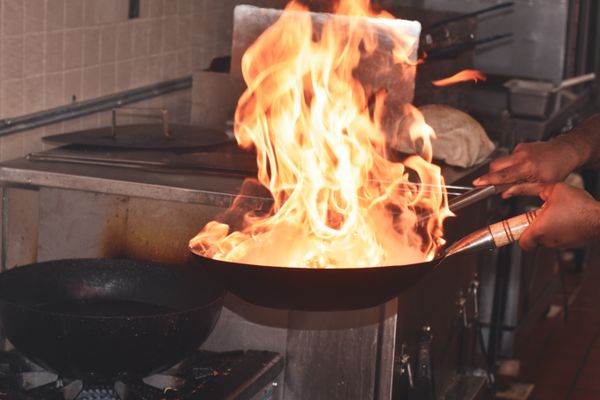
Drop a batch of cold, wet vegetables into a light pan and its temperature collapses. Everything then sits below the point where browning happens, releases its water, and boils in its own liquid until the pan recovers. That is the mechanism behind the very common complaint of vegetables that steam instead of frying.
A heavy pan carries enough stored heat that the same batch barely dents it, so the surface stays above the browning threshold and the water that comes out evaporates immediately rather than pooling. This is why weight matters more than any surface treatment for anything that needs to brown, and why a heavy tawa produces a different flatbread from a thin one.
The cost of mass is responsiveness. A heavy pan takes a long time to reach temperature and a long time to come down, so it needs preheating properly and cannot be rescued by turning the flame off. For long, slow cooking that stability is precisely the advantage; for something delicate that must be stopped promptly it is a liability.
Reactivity is the one that changes the flavour
Acidic ingredients react with several metals, and Indian cooking is full of acidic ingredients. Tamarind, tomato, lime, yoghurt and vinegar can all pull metal ions from a reactive surface, which produces a faintly metallic taste and can discolour the food — a light-coloured gravy going grey, or turmeric shifting colour unexpectedly.
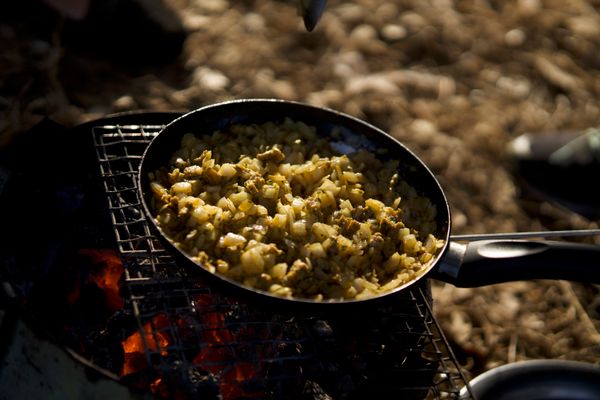
Uncoated aluminium and unseasoned cast iron are both reactive in this way, which is why acidic dishes are traditionally cooked in stainless steel, in tin-lined vessels or in earthenware. Well-seasoned cast iron is much less of a problem, since the polymerised oil layer sits between the acid and the metal, though a long simmer of something very acidic will strip that layer.
Iron does have one genuinely useful consequence. Cooking acidic food in an iron vessel transfers a small amount of iron into it, which is a real and measurable effect and has long been part of the argument for iron cookware. How nutritionally significant it is depends on diet and on circumstances, and it is not something to build a health plan around.
Seasoning is a surface, not a coating
A seasoned pan works by a chemical process rather than by having oil on it. Oil heated past a certain point on iron polymerises, forming a hard, bonded layer that is not oily and does not wash off. That layer both smooths the surface and separates the food from the reactive metal underneath.
This is why a seasoned pan improves with use and why it can be ruined. Repeated cooking with fat builds the layer up; scouring, prolonged boiling of water and long contact with acid all break it down. Neither the building nor the destruction is mysterious once the layer is understood as a material in its own right.
The most practical conclusion from all of this is that the right pan depends on the dish rather than on quality. Something acidic wants an unreactive surface. Something that must brown wants mass. Something that needs precise control wants conductivity and low mass. A kitchen with three modest pans covering those cases will cook better than one with a single expensive pan trying to do everything.
Common questions
Can I cook tamarind or tomato dishes in cast iron?
For a short cooking time on a well-seasoned pan, generally yes. For a long acidic simmer, it is better avoided — the acid attacks the seasoning layer and then the metal, giving a metallic taste and a pan that needs reseasoning.
Is a heavy pan always better?
No. Mass helps enormously with browning and with stability, and it works against you when you need to change temperature quickly or take a pan off the heat and have the cooking stop. A tempering, for instance, is easier in something light.
Why does food stick in my steel pan but not in the same pan at someone else's house?
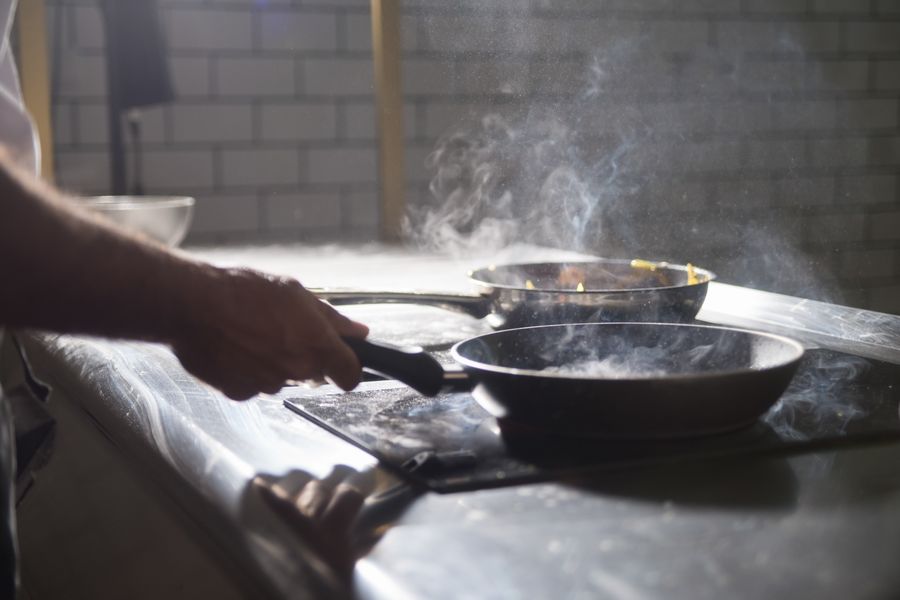
Usually preheating. Steel needs to be genuinely hot before fat and food go in, because a properly heated surface with hot oil on it keeps a thin layer of vapour between food and metal for the crucial first moments. Adding food to a lukewarm pan lets protein bond directly to the surface.
Features writer, Wah Taste
Nikhil writes about everyday cooking, street food, spice & pantry, mostly the parts other people skip and would rather show the working than assert the conclusion.